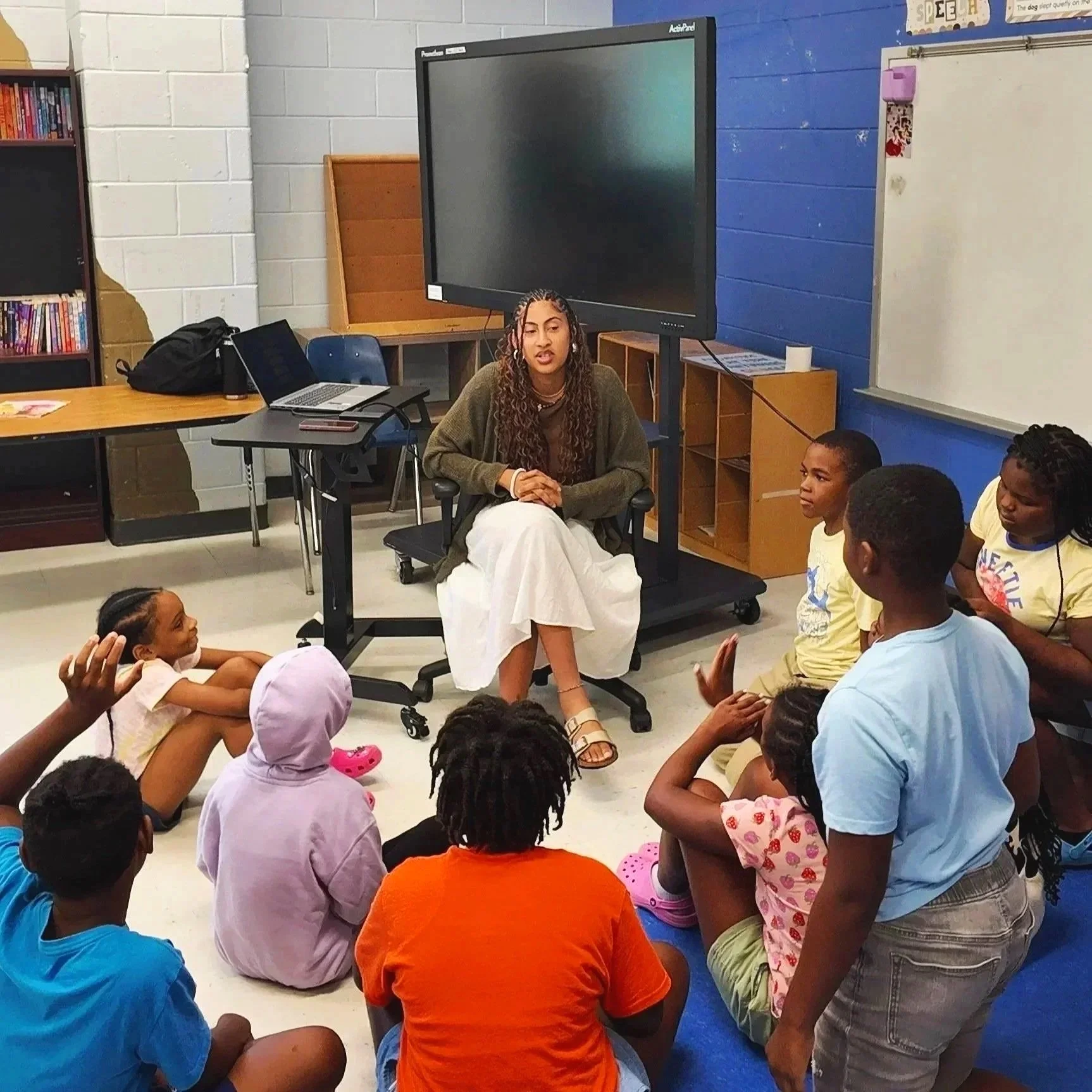
Throughout the first week of camp, there are a plethora of educational experiences aimed at shaping the identity, confidence, and future of the young people attending and working at this camp. These experiences are well-rounded, ranging from Black Studies and African dance to rowing and cooking. These experiences give youth ample opportunities to develop lasting skills and cultural wisdom.
In the Black Studies course, throughout the first week of camp, students learn about Ancient Egypt/Kemet. This course teaches students about pre-colonial African societies and the important culture that is ultimately tied to them as Black people. One of the cultural concepts they learn about is the 42 laws of Ma’at, a set of ideals the Ancient Egyptians lived by that allowed their civilization to thrive for a remarkable span of years.
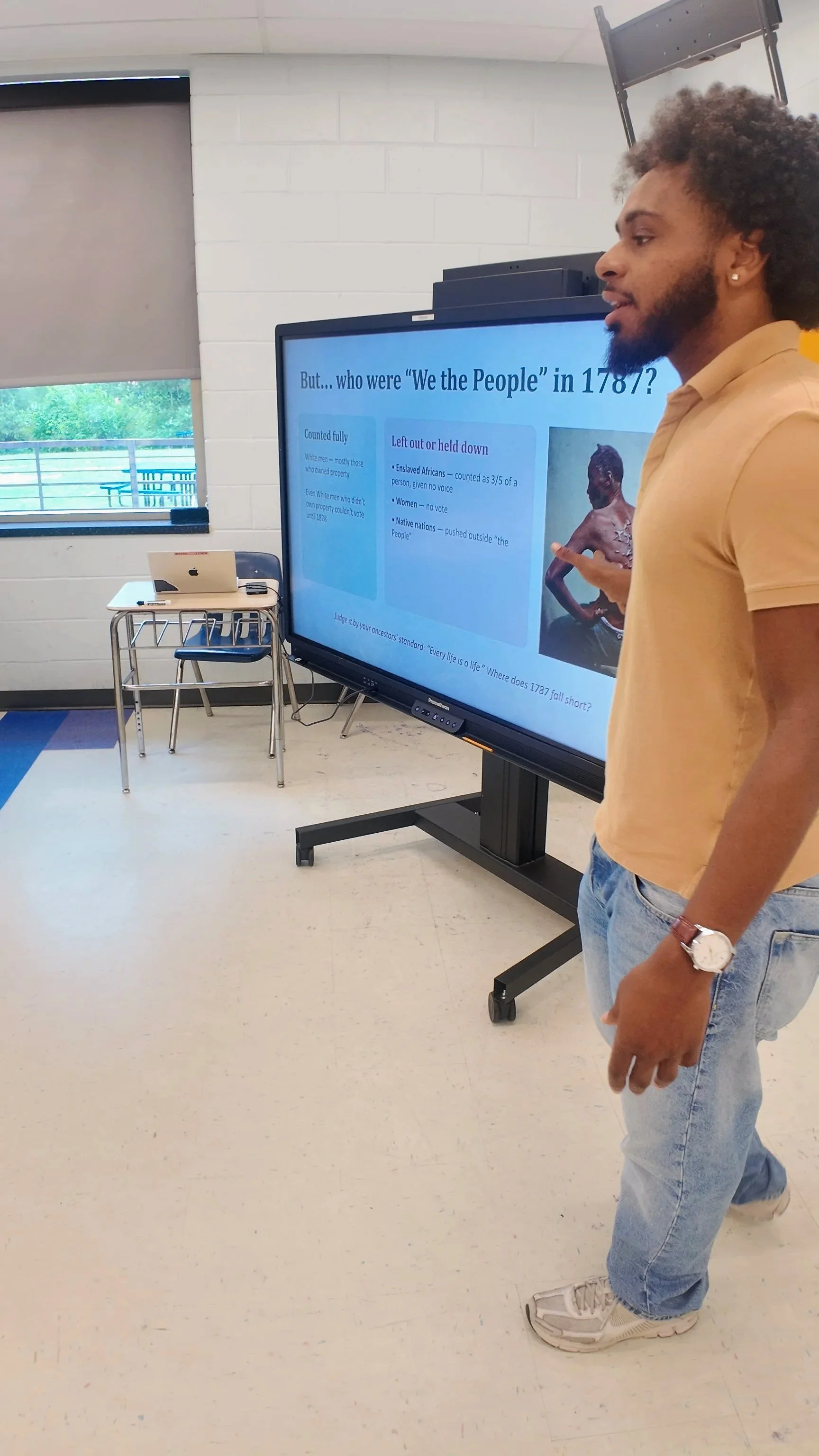
When asked why the Ma’at ideals are important to them, a student remarks, “ It teaches that anger can turn into hurting others and you can affect the way people feel.” While learning about the 42 laws of Ma’at, students learn how adopting certain values from it could positively impact their lives and future through the way that they govern themselves.
Another African society that the Black Studies course explores is the Mali Empire. This ties into the lesson about Ancient Eygpt/Kemet, and in learning about the revolutionary and prosperous Empire, students are inspired to follow in the footsteps of its leaders and build a society where they can thrive.
During this lesson, students participate in a collaborative activity in which they build an imaginary civilization. The goal of this activity is to create a civilization that will remain prosperous, peaceful, and thriving over time. A conflict was introduced to further engage the students, where they were asked, “If a citizen says one of your three sacred laws is unfair to people like them, can your laws be changed? Who changes them?” In response, the students stated, “We would have a jury so people can agree on changing the rule or not, and everyone has to agree to be fair.”
By the end of the activity, the students have learned the importance of rules and how they are essential to a thriving society. The students are therefore able to retain the knowledge needed to pursue a future in which they will establish change through leadership.
The African dance course provides students with an opportunity to connect with their roots and gain confidence in their race. Students have learned a traditional African dance called Lamban. This dance is the dance of griot-jeli, the West African oral historian. While learning this dance, students have found themselves interested in learning about their ancestors, giving them a greater appreciation for their culture.
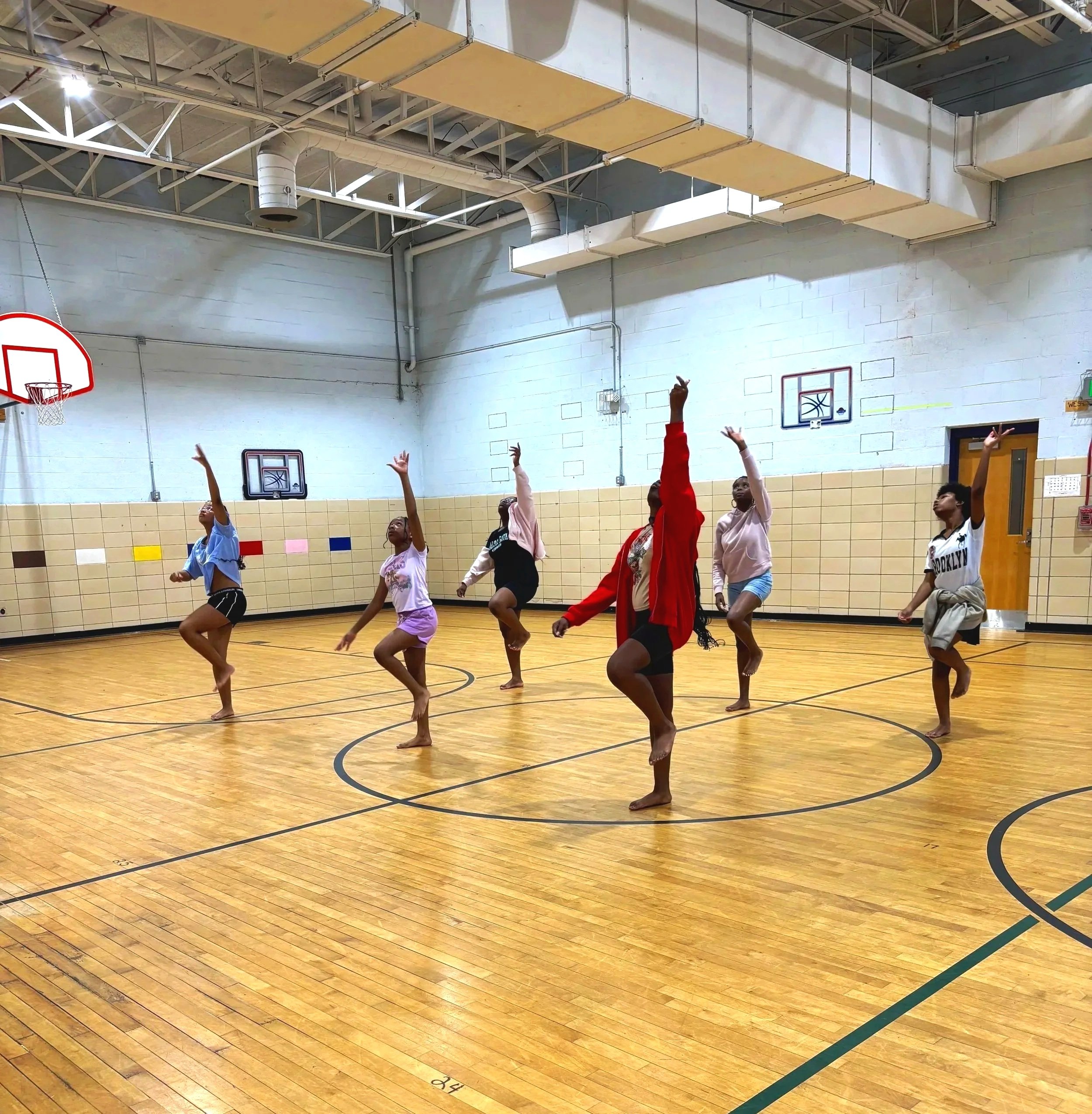
When asked about the knowledge students will gain and its impact on them, the African dance instructor Miya Ajanku stated, “Culturally responsive education allows the children, the student, and the learner to see themselves in what's being given to them, which means that they're attached to it, meaning that they can walk away with something they can use in their lives.” This means that students are leaving this camp with a newfound love for their culture and race that will be retained for the rest of their lives.
In the storytelling and performance course, students are learning the importance of storytelling and the impact it has had on the black community, and how it continues to impact the black community. Students learn to appreciate storytelling and how it has an extremely tangible way of bringing people together. Whilst learning, students discover how storytelling of the past can invoke change in the present.
When asked how stories help build community and their importance, a student stated, “Stories are important to help us learn lessons and remember our past.” These students are retaining the idea that being knowledgeable on ones history and culture is essential to flourish in society, as those who are ignorant of their history will naturally repeat it. Therefore, students are learning the importance of storytelling and a unique way of bringing people together and illuminating history.
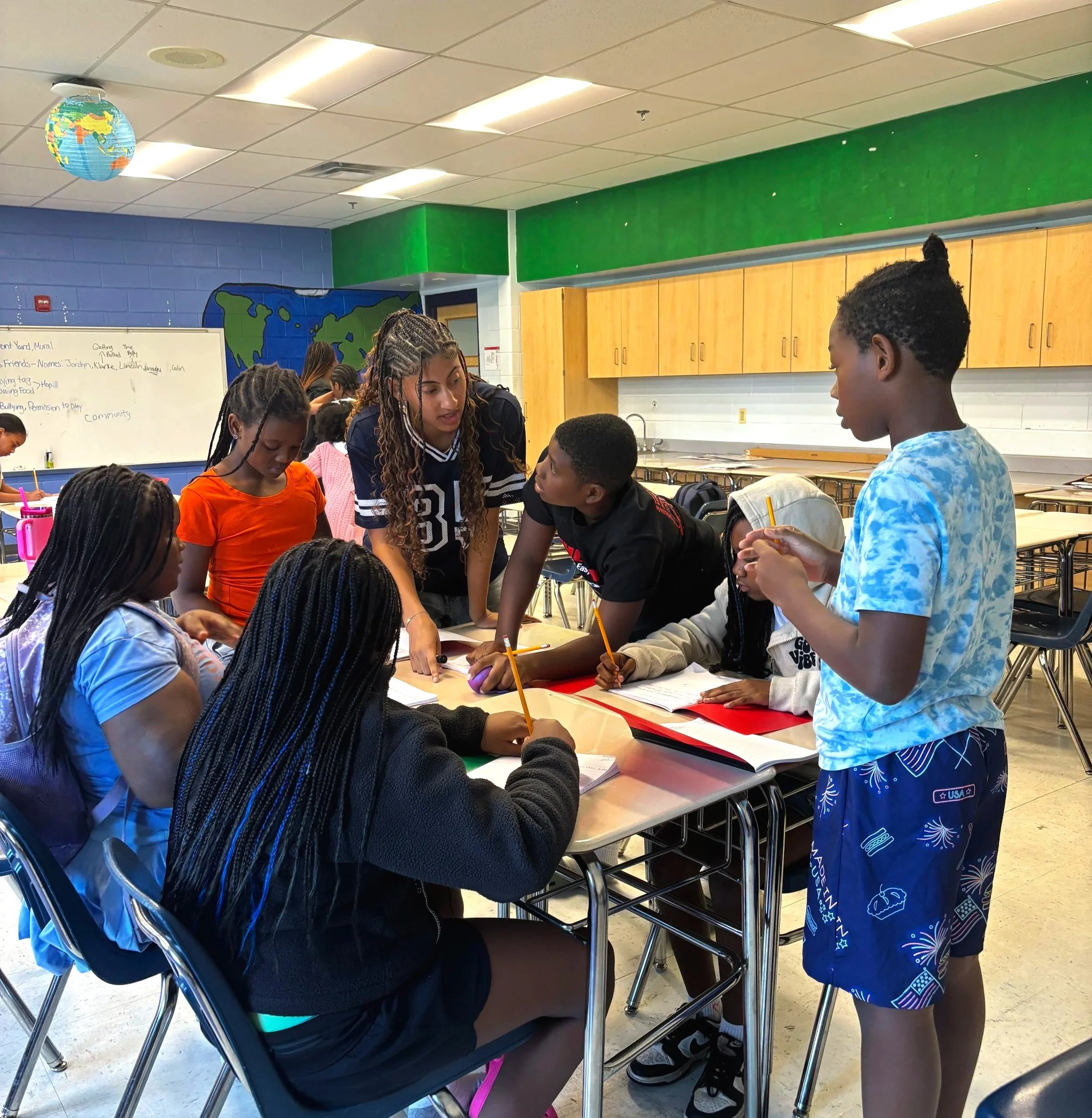
This summer camp experience is important for the staff’s youth workers as well. This is because they get to learn about topics they may not have learned before, as well as develop skills that will be beneficial when pursuing higher education and future careers. This is especially beneficial for youth workers looking to pursue careers involving childcare and education. When asked about the importance of Black education for the youth in Baltimore, a youth worker stated: “Black education matters because some people tried to hide black history from kids that don't know their history.” Another youth worker stated, “Students should know about the history behind where they come from and their ancestors.
These educational experiences and lasting lessons are important because they can be the catalyst for a future generation of educated, liberated, and socially conscious citizens who can lead the black community towards universal liberation and greatness.
Throughout history, Black people have always been at a societal disadvantage. And have been experiencing the hardships that come with this disadvantage for nearly half a millennium, yet in current times, our conditions are far easier to navigate than those of those who have come before us. One of the reasons for this is education. Education has allowed us as a community to pursue liberation despite our many limitations. And in learning about our past, culture, and limitations, we’re brought together as a community and allowed to curate change.
The great revolutionaries of the past prevailed by gaining education by any means necessary. This proved to be fruitful as education opened doors and provided the opportunities necessary to make change for themselves and their communities.
Knowledge is power, and power brings liberation. Exploitation goes unnoticed to an uneducated person lacking knowledge; to succeed, one must understand their capabilities and knowledge and use them to their advantage. Those who wish to demean and oppress the black community have exploited the fact that we have been underprivileged enough to lack the knowledge necessary to revolt.
Dr. Carter G Woodson gives insight into how ignorance makes people vulnerable to exploitation as he remarks, “When you control a man’s thinking, you do not have to worry about his actions. You do not have to tell him not to stand here or go yonder. He will find his proper place and stay in it…His education makes it necessary.” Living in ignorance gives those who want to see someone fail the opportunity to manipulate them without their knowledge. Therefore, having education and knowledge is one of the most powerful tools one can have at their disposal.
Education is so important for the black community; moreover, culturally responsive education is essential. This is because learning about the history and culture that is linked to someone specifically can teach that person so much, as it has a certain relatability that cannot be taught by education tailored to another demographic. Therefore, gaining exposure to this education during adolescence is an extremely beneficial tool for success.
Culture matters, and learning from people who have experienced situations that can relate to someone ensures that they're learning about things that will actually be beneficial to them in their endeavors. In Assata Shakur's autobiography, she gives insight into the need for education for the black community that relates to them culturally and will be beneficial for them specifically, "The schools we go to are reflections of the society that created them. Nobody is going to give you the education you need to overthrow them. Nobody is going to teach you your true history, teach you your true heroes, if they know that that knowledge will help set you free." This is why we need education that will benefit the youth of the black community. When asked, “Why is learning about your culture important to you?” a student remarked, “I can learn my background and learn to appreciate who I am as a person.”
This illuminates the importance of the education being received by the students attending this summer camp. They're developing fundamental skills that will be beneficial in their endeavours, and the cultural knowledge that will allow them to navigate life with a lens of wisdom.
Education is necessary for liberation, success, and leadership. An education that is culturally responsive, multifaceted, and tailored to the needs of the youth receiving it can make all the difference when producing a generation of socially conscious and liberated citizens who produce change universally.